This is Part Two. Part One is here.
I need to tell you where I was actually standing, because it matters for who this is for.
I was not the failing child. Nobody was worried about me.
I was not the star child either. Nobody was investing in me.

My results were average. So nothing happened. No remedial help, because nothing looked broken. No special attention, because nothing looked exceptional. Just a quiet, unspoken verdict that this was my level, and everybody moved on.
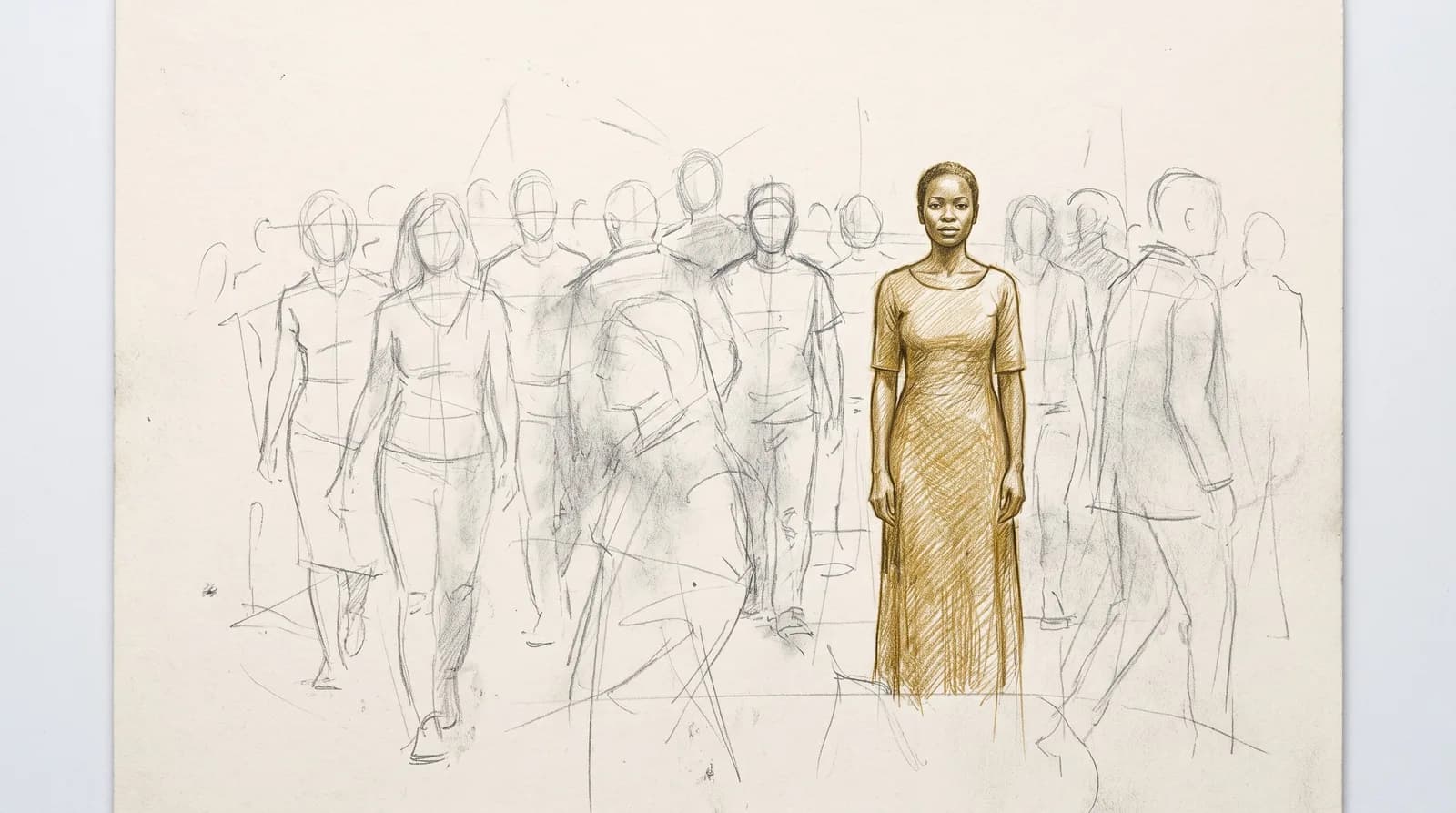
In 2023, I started calling these people more than average, and I have not stopped since.
I do not say it as a description. I say it as a correction. Because the person I am describing has already accepted average as her ceiling, and she has usually accepted something worse than that. She thinks she is not good enough. She is putting in enormous effort. And here is the cruel arithmetic of it: the more effort she puts in, the more failure she can see, because effort raises what you attempt and attempting more gives you more places to fall short.
So eventually she stops wanting to put in effort at all. Not from laziness. From arithmetic.
And underneath it sits a shame that almost nobody names properly: the shame of having potential and not having anything to show for it. You know what you are capable of. You know how hard you have tried. And there is nothing on the table. That gap is a particular kind of humiliation, and it doesn’t look like failure from the outside, which is why nobody comes to help.
I plan to build something for these people. Not a coaching programme, a charity. Somewhere they can redefine how they see themselves and pick up the practical things nobody handed them: life skills, speaking skills, navigation skills. So that they are not just existing in the world but actually in it and part of it.
That is where more than average came from, and that is who this article is for.
And I want to say clearly, this is not only a neurodivergent story. Plenty of neurotypical people live this exactly. Because a diagnosis explains why the tasks were hard, but it does not explain the verdict.
The verdict was cultural.
A culture that rewards one shape, expects everybody to conform to it automatically, amplifies your shortcomings, and expects you to be the best. Put a differently wired brain into that, and the outcome is not underperformance. It is a person who stops attempting.
First, I tried to beat it, and that was still the sentence running me
I have to be honest about this chapter because it is the one people skip.
When I finally decided to move, my first move was not peace. It was proving.
Look at me now. All of you who ever bet on me. Watch this.
I listened to every podcast. I bought every book anybody recommended, and I want to be clear: I bought them. I did not always read them. I had the books. I had the look of a woman who knew what she was doing. I followed everybody. I chased everybody’s system, everybody’s morning routine, everybody’s method.
I was searching for a destination. Somewhere I would finally arrive, the applause would happen, somebody would say, “You are good,” and it would be over.
That is gragra. Frantic, forceful motion. And it wasn’t the opposite of nobody praising you.
It was the same trap at higher volume.
I had only changed who I was performing for. I was still waiting for the room to give me the verdict; I was just running faster while I waited.
NO GraGra did not come before that. It came after it failed.
2010, and a living room full of other people’s dissertations
I want to tell you something I have not written down before.
In 2010, I had a two-bedroom flat with a big living room, and that living room became where everybody came to write. Five or six people at a time, all working on their dissertations. And I was the one moving around the room telling them what to do. Structure this section here. That argument is not landing; take it out. You have buried your finding; bring it up.

I was good at it. Everybody in that room knew I was good at it.
And then I could not write my own.
Extension after extension, year after year, sitting in front of my own work completely unable to move it forward. The exact thing I had just done for six other people.
That is the shame I was describing. It does not look like failure from the outside. From the outside, it looks like a woman who is clearly capable, so nobody comes and asks what is happening.
The question the therapist asked me
In 2016, I was sitting with a therapist, and I am going to be fully honest about this because it is the hinge of everything.
She looked at my history, and she said, you have struggled to study your whole life, and I do not understand how nobody picked this up when you were a child. Your verbal skills are your strongest skills. They are not a side thing; they are the main instrument.
And then she asked me the question.
Why are you forcing yourself through a PhD when you already know it will be the exact place you struggle?
I did not have a good answer. What I had was the truth, and it came out of my mouth before I could dress it up.
I said I finally worked out how to study. And then I lost it.
Because that is what happened: in 2010 I cracked it. For the first time in my life, I understood how my own mind actually took in information. And then it went. Whatever was holding it up came away, and I watched my own skills regress in real time and pretended to everybody, including myself, that nothing was wrong.
She said, so why are you punishing yourself?
I had no answer for that either.
But I have one now, and it took me nearly ten years to find it. I was still trying to produce the result that would finally get the sentence cancelled. A doctorate is a very expensive way of asking a room to say you are not average.
What actually turned it
Four things, and I only saw the pattern between them this week.
Being alone.
Chronic illness, which forced me to be still instead of just moving.
A breakup.
And in 2014, a book. StrengthsFinder. I read my results, and I sat there thinking, wait. I have strengths? There are things I am actually good at? This is strange. I have strengths.
That was the first time in my life I saw myself as creative.
Now look at what those four have in common, because it took me over a decade to notice.
Every single one of them emptied the room.

No audience. Nobody to get carried away in front of. Nobody positioned to deliver a verdict on me. And into that empty room came an instrument, not a person, that handed me an assessment nobody had the standing to overrule.
That is why the book worked when people never had.
Acceptance, awareness, acceptance
The shape went like this.
First there was acceptance, but I had accepted a false picture of myself. I had taken somebody else’s verdict and filed it as fact.
Then in 2014 came awareness. Oh. That is who I am.
And then acceptance again. The same word, running in the opposite direction. Accepting myself this time.
But I have to be honest about the timeline, because this is where most stories lie to you.
Some of what I started with that book did not come together until 2018. Four years. It was not a moment. It was consistent improvement; it kept improving, and I didn’t read it once and pack it away.
The book started something. Showing up daily is what did it.
And what carried me through those four years was not a strategy. It was willingness. I said to myself, what if I fail? Fine. What if I succeed? Also fine. I will attend every day.
That is the whole technology. There is nothing cleverer underneath it.
Wetin dey for Sokoto dey your shokoto
I had been searching for my purpose since I was ten years old. Ten. Everybody else seemed to have found theirs, but I hadn’t found mine, so I kept looking outside for it.
We have a saying: Wetin dey for Sokoto dey your shokoto. What you are travelling to Sokoto to find is inside the trousers you are already wearing.
I did not find it by building a personal curriculum. I didn’t design a programme. I sat with myself. I listened to myself. I listened to my body. I permitted myself.
And the self-love part, which I resisted for a long time because it sounded selfish, turned out not to be selfish at all. It was just the first time anybody had assessed me kindly, and the only person available to do it was me.
But not everybody gets my route
Here is where I have to be careful, because I could end the article here and it would be beautiful, and useless.
My route required stillness that came from illness. Solitude that came from a breakup. Four years. That is not a method. That is a set of circumstances, and most people reading this do not have them.
I am not willing to describe a wound beautifully and leave you with nothing to do on Monday.
So let me give you the one thing that actually transfers.
Being alone is not a holiday
When I say being alone brought me back, I do not mean booking a retreat. I do not mean a weekend away. I do not mean waiting for a season of your life to clear.
I mean emptying the room, even briefly. And you can make that as simple as you want.
It is the twenty minutes before anybody else in the house wakes up. It is the walk without the podcast on. It is the bus journey where you do not open your phone. It is one page in a notebook nobody will ever read.
What matters is not the length. What matters is that nobody is watching, because the sentence needs an audience to work, and in a room with no audience you can hear your own assessment for the first time.
Then, and only then, you can ask where you actually are.
Where are you standing?
Not where you want to be. Not what your purpose is. That question kept me busy from age ten to about thirty-five, and it never once answered itself.
Just this. Where are you currently standing?
Sit with these four. Write the answers somewhere private. Do not tidy them.

- What did you decide you were not good at, and how old were you when you decided it?
- Who actually made that assessment, and what were they measuring when they made it? Were they measuring the thing they sentenced?
- When somebody corrects you now, what does your body do? Does it adjust, or does it freeze? The difference tells you which sentence is still installed.
- What do you keep not attempting, not because you tried and failed, but because you cannot tell in advance whether you would be any good?
That is the audit. Four questions. No score, no result, nothing to submit to anybody.
You keep the answers. That is the point.
Because this whole article is about a girl who was never permitted to hold an opinion about her own work, and everything I build now is an instrument that hands the assessment back to the person it belongs to.
I am still finding out
I want to end honestly.
I haven’t fully solved this. I still catch the freeze. There are things I still do not attempt. I am forty-something years into a sentence that took about four seconds to say, and I am still unpicking it.
I do not know yet how you spark curiosity in a person whose curiosity was punished. That is the next thing I want to understand, and I am working on it in real time.
But I know this much.
You are not lazy. You are not average. You were assessed with the wrong instrument by people who weren’t qualified to hold it, and you filed their verdict as fact because you were small and they weren’t.
You are allowed to reopen the case.
Nobody is praising you.
Fine. I am not asking anybody to praise you.
I am asking you to stop waiting for it.
DK Jonah. Knowledge Architect. Founder of The NO GraGra Practice and The Autonomy Code.
NO GraGra. Slow first, then precise.