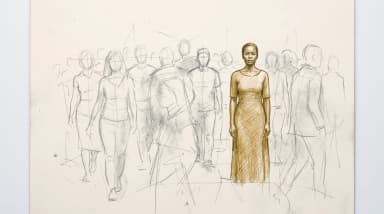
The Autonomy Code works across five pillars. Not five topics. Five load-bearing walls; when one is strained, the whole structure leans on the others and everything feels heavier than it should.
Identity is who the work is coming from. The strain shows up as a role that fits like borrowed clothes: competent, polished, even profitable, and somehow still rented. The move is from Borrowed Identity to Owned Ground: doing the work from who you actually are, not from the template you adopted to be taken seriously.
Message is what you know, made sayable. Most capable people have private wisdom that is years ahead of their public clarity. The strain is speaking in other people's language about work that is deeper than the market can currently see. The move is a message you can own and defend: your words, carrying your knowledge, to the people who need it.
Strategy is how decisions get made and carried out. The strain is executing through plans that were never built from your actual life, so they work in theory and stall in your hands. The move is from Unsupported Execution to Self-Governance: sequence, structure, and rhythm designed around how you actually operate.
Resources is what holds the work up: time, energy, attention, money, support. The strain is Scattered Ownership, running on capacity you have not honestly counted. The move is to Owned Capacity: building at a pace your real life can keep, which is the only pace that compounds.
Relationships is who the work is held with. The strain is belonging through performance: being everyone's safety net, approval doing the job structure should be doing. The move is support without self-abandonment; relationships that hold you without holding the pen.
Five pillars, one honest admission: you cannot strengthen all five at once, and you do not need to. There is always one pillar carrying the strain for the others. Find it, and the work stops being everywhere and becomes one clear move.
That is why every engagement here begins with a diagnostic rather than a plan. Twenty-five questions, one pattern, one strained pillar, one first move.
When you are ready to find yours, take the Ownership Scan.